Muskingum:
The End of an Island Refuge's Fossil Fuel Legacy
Words and photographs
by Kristian Thacker
This story was supported by the Pulitzer Center.
The first time I went to Muskingum Island was in 2024, before the work began.
Listen to the sounds of the island.
On an unusually cool and dry morning in late July, I met Victor Elam, the Refuge Manager of the Ohio River Islands National Wildlife Refuge, at a boat launch just north of the island in Williamstown, West Virginia. As we moved downriver, the constant crash of the water against the boat merged with the engine’s dull hum. The flat grey sky and shimmering river came close to touching, separated only by the trees along the riverbank.
At first, it was difficult to distinguish Muskingum from the West Virginia shoreline. The island is a thin bar island, almost two miles long from north to south, and entirely forested. It sits in the middle of a mostly industrial stretch of the Ohio River between Marietta, Ohio, and Parkersburg, West Virginia, a place where barges cart coal and chemicals to plants on either side.
And technically, Muskingum is a haven for wildlife: it’s part of the Ohio River Islands National Wildlife Refuge, a group of 24 islands in the Ohio River scattered from Shippingsport, Pennsylvania to Maysville, Kentucky. But like so much of the region, Muskingum’s history of wildlife and conservation is one that’s been entwined with resource extraction for more than a century.
Which is why on that cool morning in July 2024, besides me, Elam was also leading two boats full of oil and gas contractors to the island.
People first drilled oil wells on Muskingum in the late 19th century. And by 1990, when the island officially became a part of the national refuge, there were still 13 unplugged oil and gas wells on the island.
Now, almost 40 years later, there was finally funding to plug those wells — part of 2021’s Bipartisan Infrastructure Law. Elam was taking these contractors on a tour to see the unplugged wells, so they could submit bids for the work slated to start the following year. It would be a large project, complicated by the island’s status as a protected space. Because of that, besides the well plugging, it would be necessary to survey and salvage the local freshwater mussel population before work could begin.
Over the next year, I made several more trips to Muskingum Island and discovered it was beginning to resonate with me. Throughout the island’s history, flora and fauna have reacted and adjusted to human development like oil and gas wells, and then reclaimed their space as humans abandoned the infrastructure. Despite the scars of human development, Muskingum can still affect a sense of awe and the significance of nature for visitors.
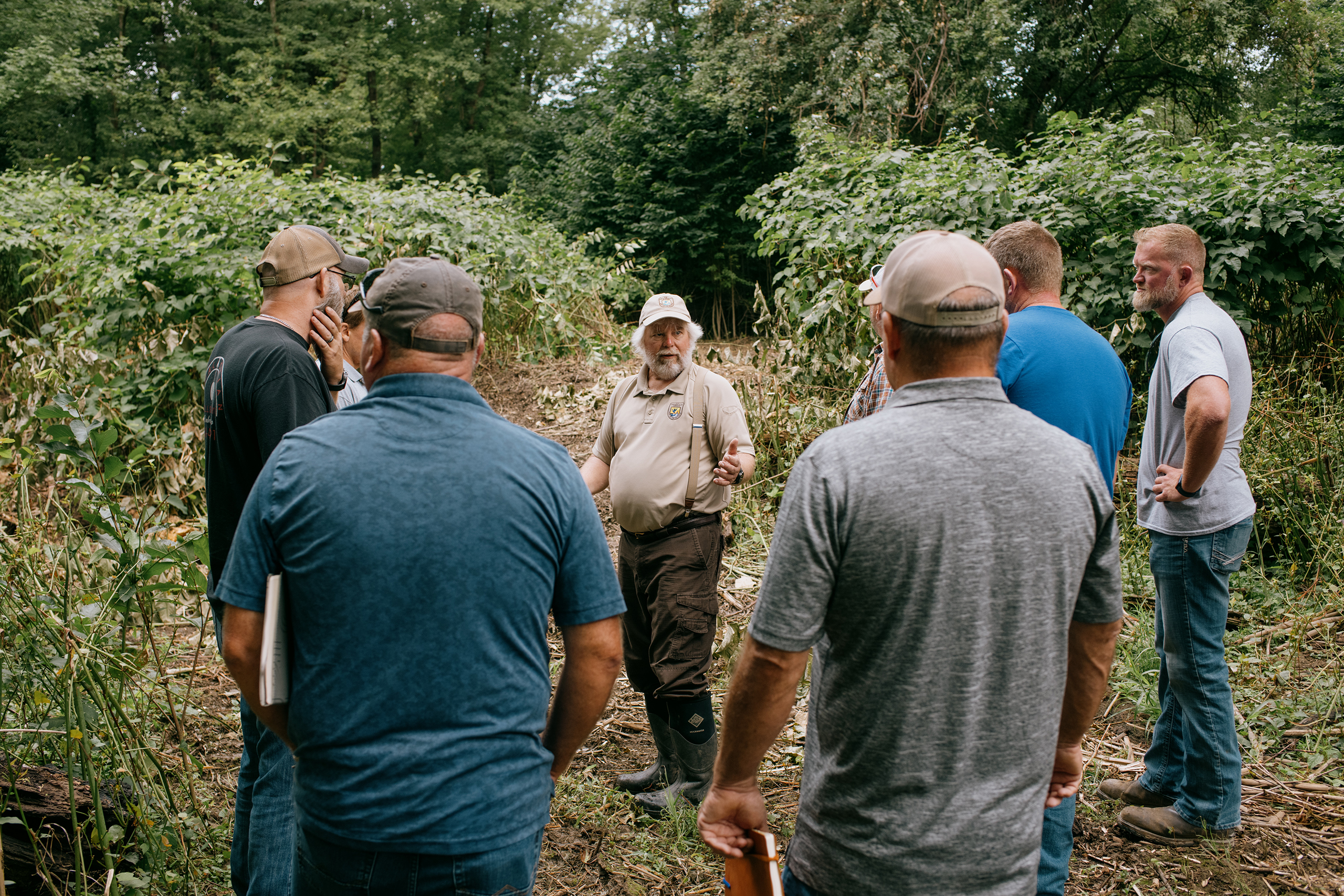
Victor Elam shows oil and gas well plugging contractors the 13 unplugged wells on Muskingum.
To someone unfamiliar with orphaned and abandoned oil and gas wells, it might seem absurd that idled wells would be left unplugged for more than a hundred years. But the situation isn’t unusual. Companies were drilling wells for decades before West Virginia started requiring permits in 1929. This lack of any early regulatory structure and enforcement means that in addition to the 6,500 documented orphaned wells across West Virginia, there are possibly tens of thousands more that aren’t documented.
In West Virginia, a well is considered “abandoned” if it has been idle, or not producing, for a year. In those cases, well operators are required to either plug the well or prove that it could still produce oil or gas in the future. But if there is no known operator or solvent owner — the case for the vast majority of these wells — it’s considered “orphaned” and becomes the responsibility of the state. There are tens of thousands of these wells across West Virginia; left unplugged, they can emit gases like methane and benzene into the atmosphere and leak liquids into the ground.
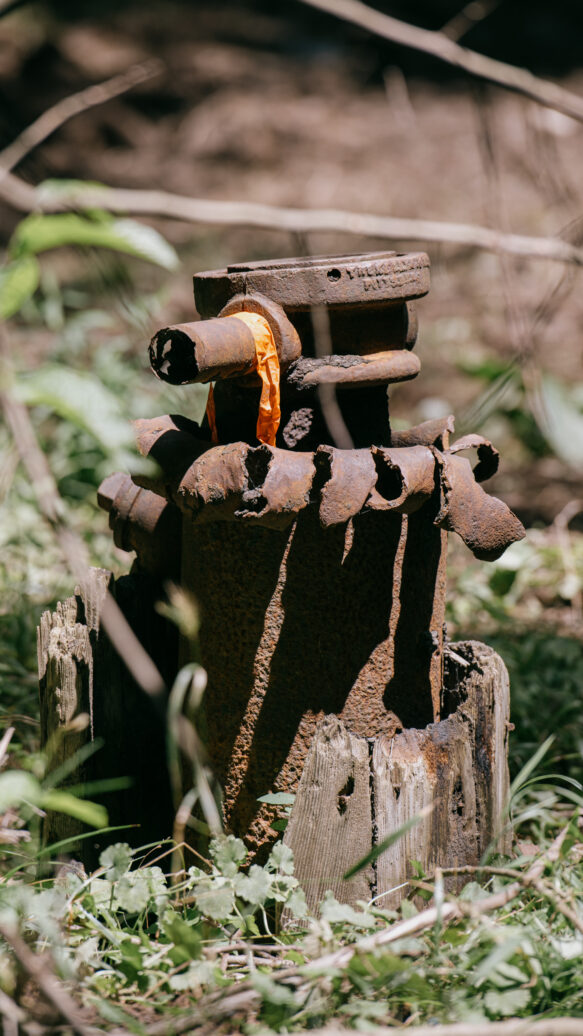
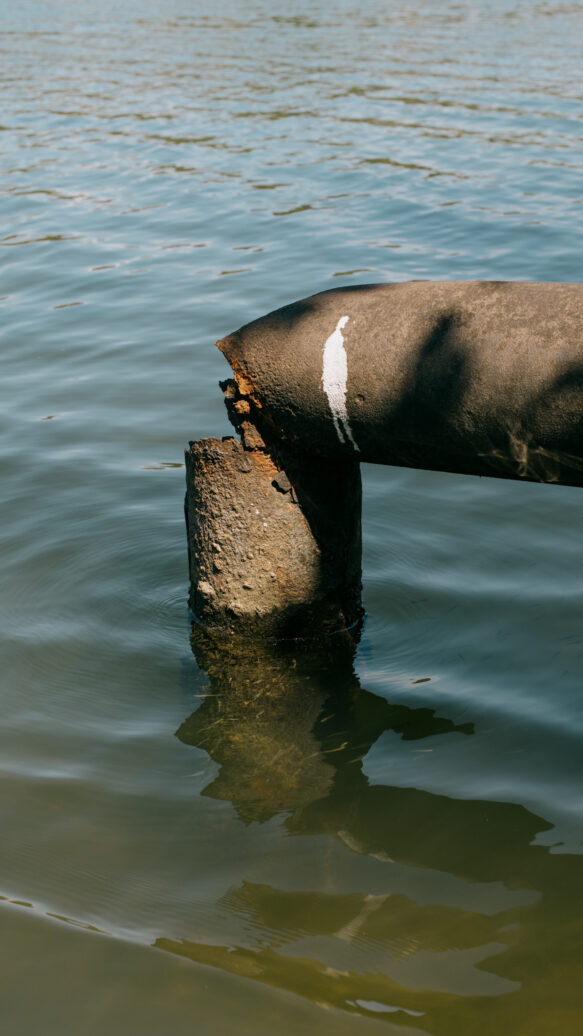
Two of the 13 unplugged oil and gas wells on Muskingum Island. Eight of the wells are actually on the island while five now sit below the waterline.
In July 2024, as Elam led the contractors on a tour of the island, the wells were marked by flashes of bright orange tape peeking out from the dense forest. Eight wells were on the island itself; some had small valves still present, while others just ended in a capped piece of casing sticking up out of the ground. Five others were offshore, sitting just off the edge of the island and nearly invisible underneath the murky waters of the Ohio River.
While all of these wells had the potential to harm the island’s ecosystem, it’s the underwater wells that posed the greatest threat. Over a decade ago, the Environmental Protection Agency did a site survey of the island and found liquids leaking from the well heads — but no action was ever taken. And for years, scientists have been worried the contamination is affecting the island’s freshwater mussel population.
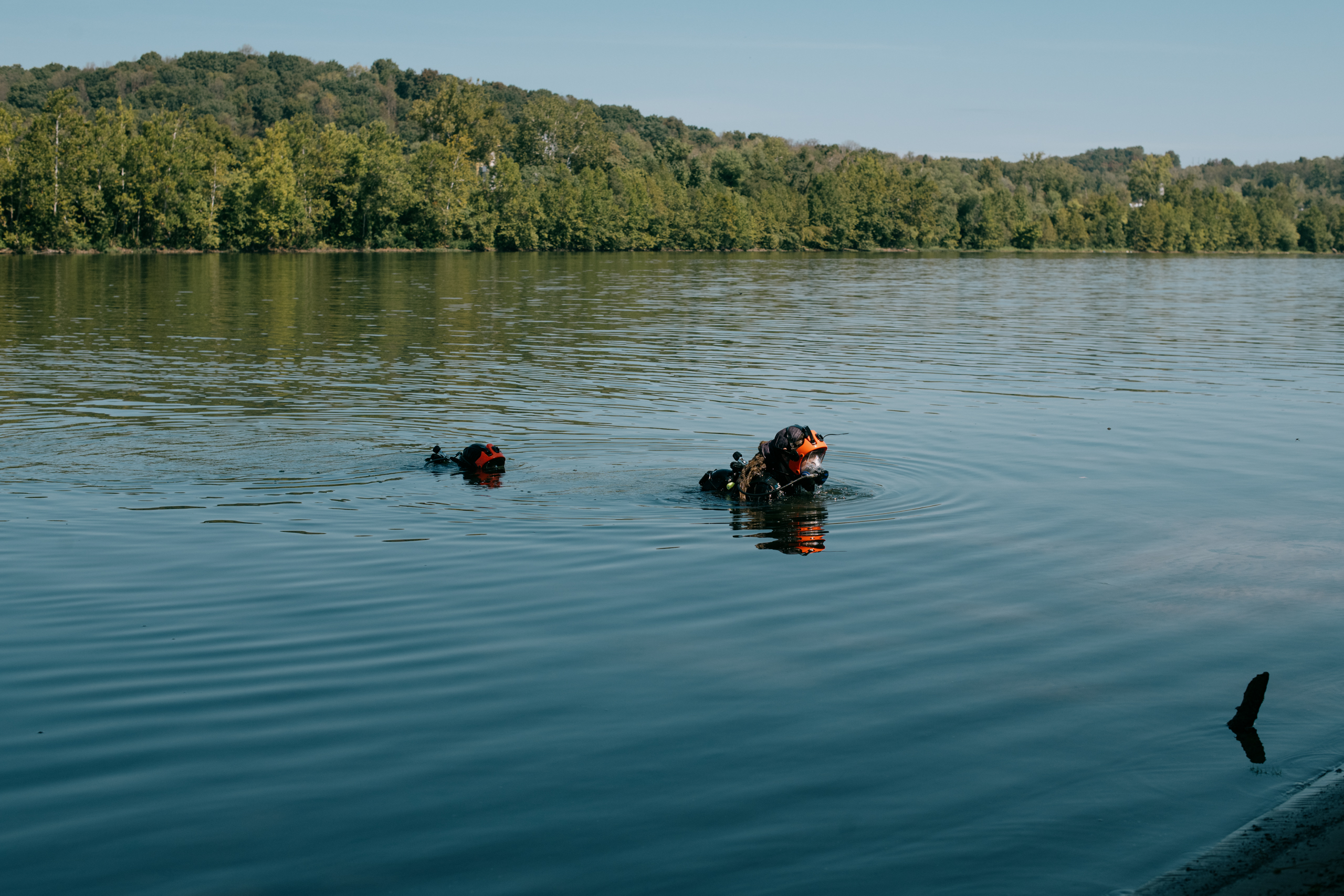
Two biologists from a freshwater mussel survey team from Environmental Solutions & Innovations, Inc., return to the shore of Muskingum Island.
Before work could begin to plug Muskingum’s underwater wells, there would have to be a salvage operation to remove and relocate the mussels. But first, biologists needed to learn more about the local mussel population.
Mussels are filter feeders — “the livers of the river” as refuge biologist Elaine Barr described them — which makes them extremely sensitive to pollution. As the animals feed they can accumulate toxins like chemicals, heavy metals and pesticides. This can impair growth, reduce reproduction and cause death. But beyond the mussels, the toxins can also bioaccumulate and be passed up the food chain.
A month after Elam’s contractor tour of Muskingum, a team of biologists was there to survey the mussels along the channel side of the island. Over 15 days in late August and early September, they would spend nearly seven hours a day crawling on the river bottom searching for mussels.
As the biologists were nearing the completion of the survey I traveled to the island myself, paddling in a kayak, to see what the operation looked like.
On this channel side of Muskingum, the shoreline was covered with a fine sand that led up to a steep bank. The island was quiet, except for the constant drone of late summer cicadas complemented by the distant sound of a jake break from a tractor trailer on Ohio Route 7 just across the river. In the distance, passing barges seemed to make no sound at all with their powerful engines muffled by the water and distance. The only audible evidence of their passage was the temporary increase of water lapping at the shore of the island.
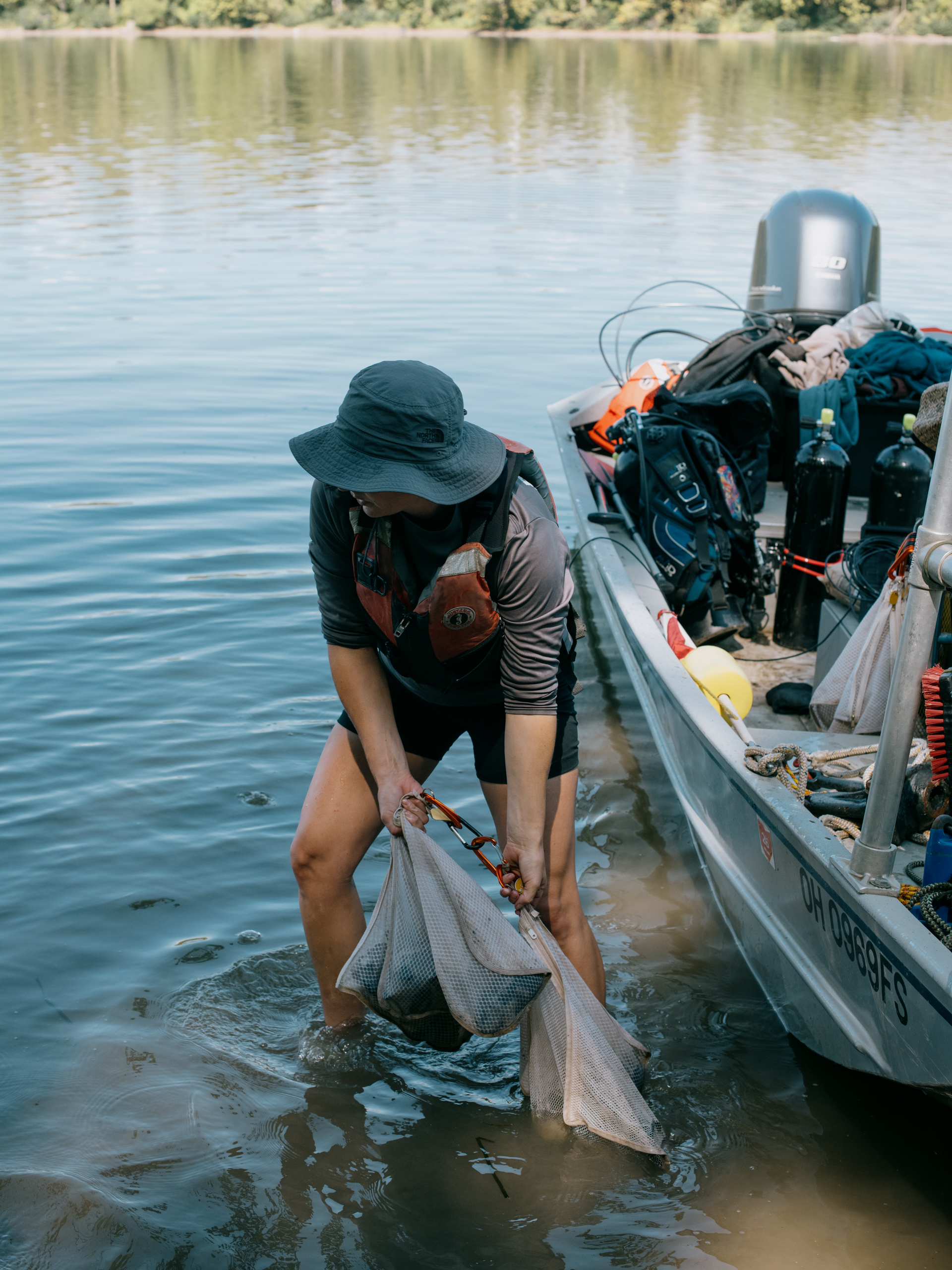
Biologist and diver Vanessa Vest moves mesh bags holding freshwater mussels collected during a mussel survey along the channel side of Muskingum Island.
When I first reached the survey area I found two team members on their boat. Below them on the river bottom the divers, in full wetsuit, scuba tanks and added weights, crawled on their hands and knees.
They had split up the survey area into 72 lines, or transects. Two divers would follow a weighted rope line that extended 213 feet into the channel of the river. Because visibility was poor, divers would feel around their survey area for mussels. They would crawl out to the end of each line, searching as they went, and return carrying their bags of collected mussels to be identified, measured and photographed. In between lines the divers would rest, switch air tanks and warm up before starting another transect.
Though there are 127 mussel species throughout the entire Ohio River basin, only 45 have been discovered near the islands set aside as the wildlife refuge. During the 15 day survey, the biologists at Muskingum had found more than 31 of those species — 6,000 individual freshwater mussels — making the island one of the refuge’s most biodiverse habitats for mussels.
Of those 31 mussel species, six were listed on the federal endangered species list: a discovery which would trigger regulatory requirements that would delay both the mussel salvage operation and plugging underwater wells.
Nathan Jones, of Hydrocarbon Well Service, pours a sack of gel into a hopper where it is mixed with water and then pumped into the well that the crew is plugging on Sept. 3, 2025.
By July 2025, Hydrocarbon Well Service had won the bid to plug Muskingum’s wells and had started the process of tackling the ones on the island itself. Even this wasn’t easy.
There’s no bridge to Muskingum, so all of Hydrocarbon Well Service’s equipment had to be ferried to the island via barge. Fortunately, a small marine transportation company was just located a few miles downriver from the island. This simplified the logistics of bringing in barges for transport, but the plugging crew was still at the whim of the barge company when it came to scheduling delivery of materials. As they worked their way through plugging the eight wells on the island, they still needed to periodically restock with loads of concrete and fuel and to offload any fluids collected from the plugging process for disposal.
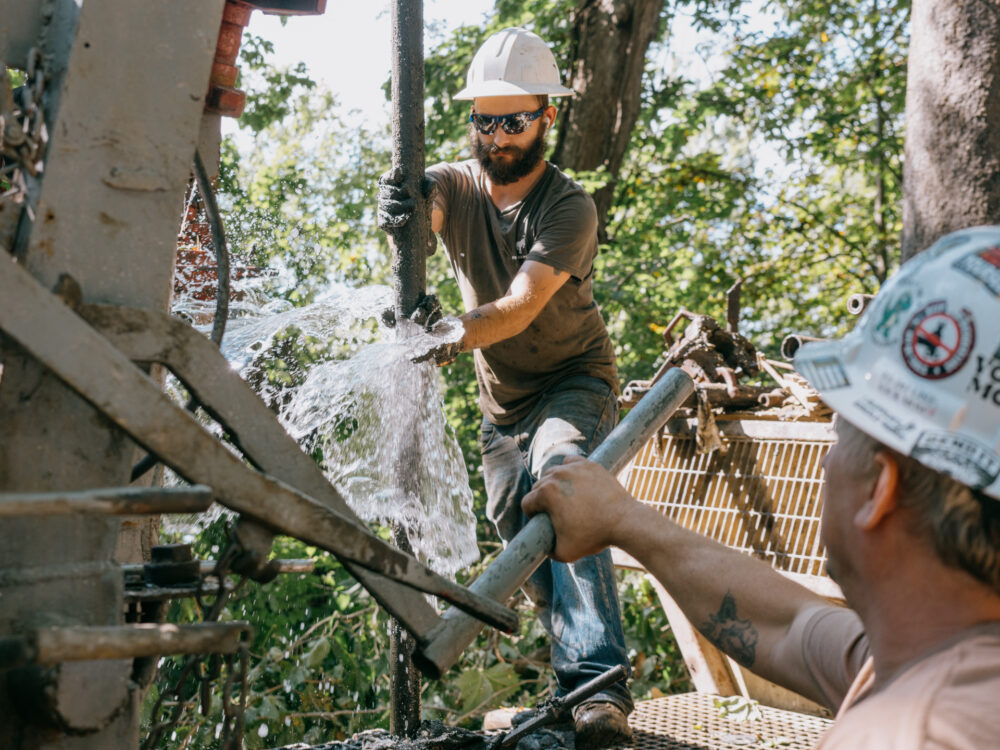
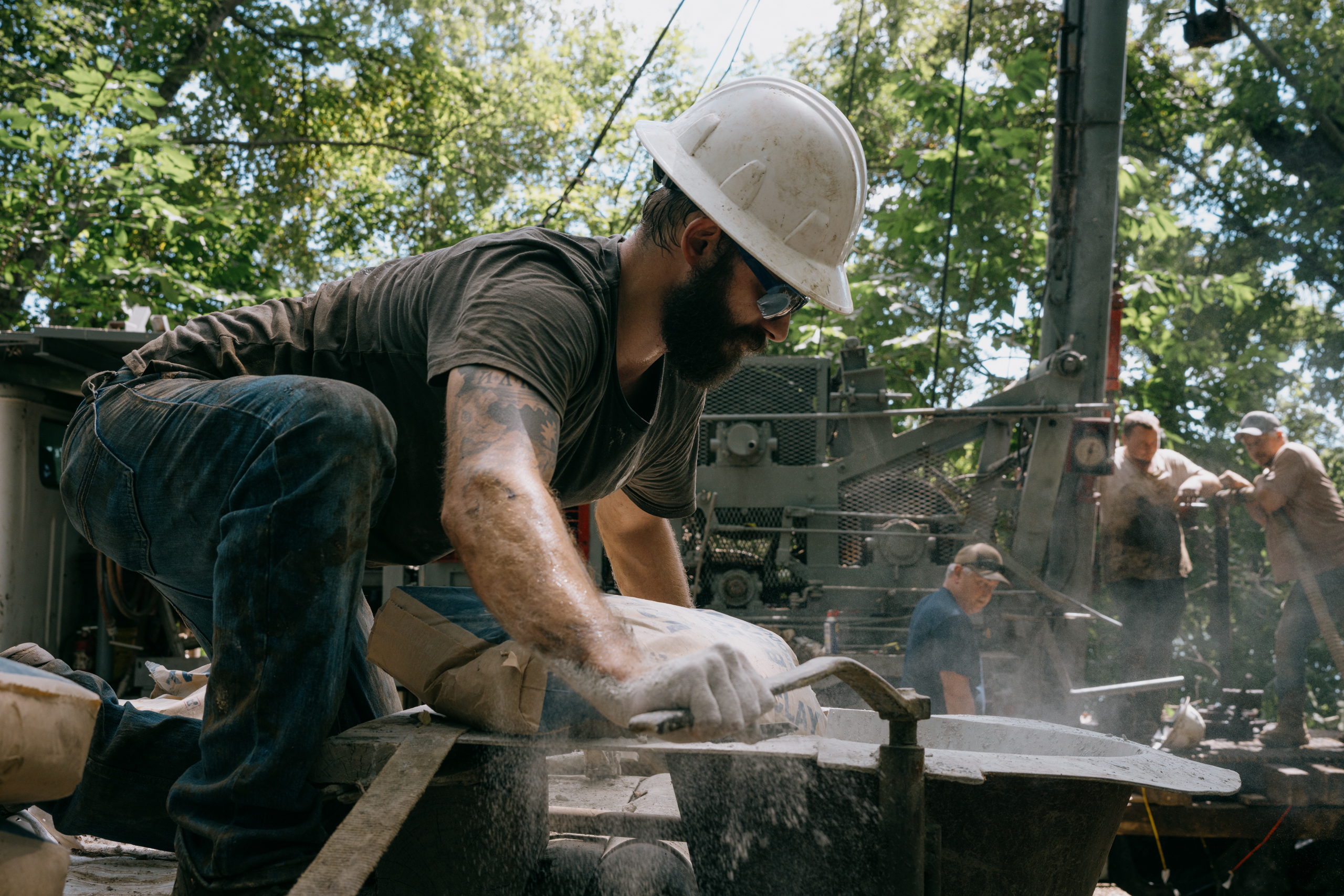
1: Nathan Jones disconnects a piece of well casing that has just been pulled out of a well on Muskingum Island as his father Paul Jones operated the crane on their rig. The well casing was full of water, so when it was unthreaded, the water gushed out.
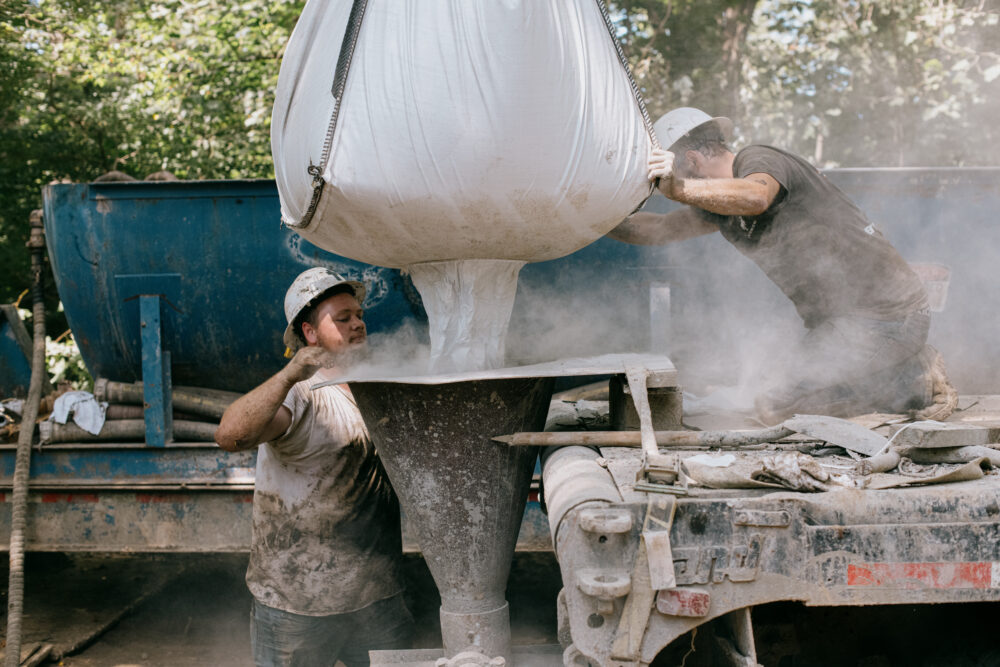
2: Ronald Jones and Nathan Jones work a "super sack" of concrete into a hopper where it is mixed with water before it is pumped into a well the crew was plugging on Muskingum Island.
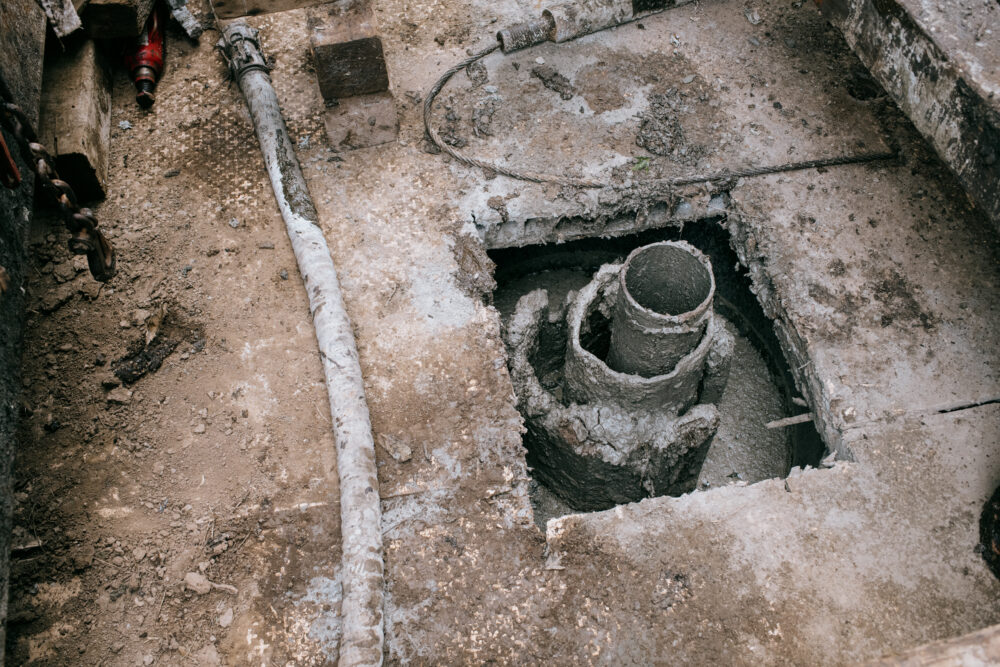
3: The casing of a well just after the second of two concrete plugs had been pumped into it. Each well on Muskingum Island was plugged with two concrete plugs separated by an intermediary gel layer. The gel allows the two plugs to move independently if there is any movement reducing the likelihood of a plug failing.
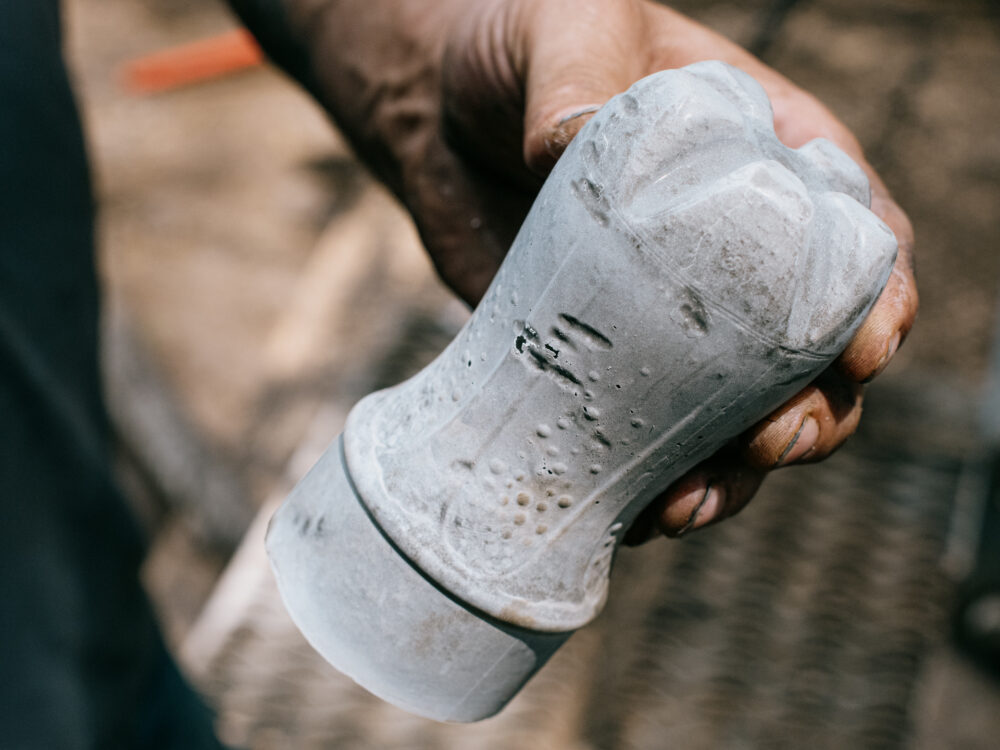
4: A concrete sample from a well plug. The crew takes samples of the concrete so they can be certain it has cured properly.
I went back to the island on July 21, to watch the process. At that point, the four-man crew led by Paul Jones was hopeful their pace would allow them to plug all of the wells both on the island and in the river before fall turned to winter. But it would be tight. On that day in late July, the crew was still getting their equipment situated around the first wellhead. Early summer rainfall had saturated the soil, requiring Jones to spend an entire day running a bulldozer along the main route between wellheads to compact the dirt. Plugging that first well — a process that involves pumping a series of concrete plugs separated by gel layers into the well shaft — would take eight days.
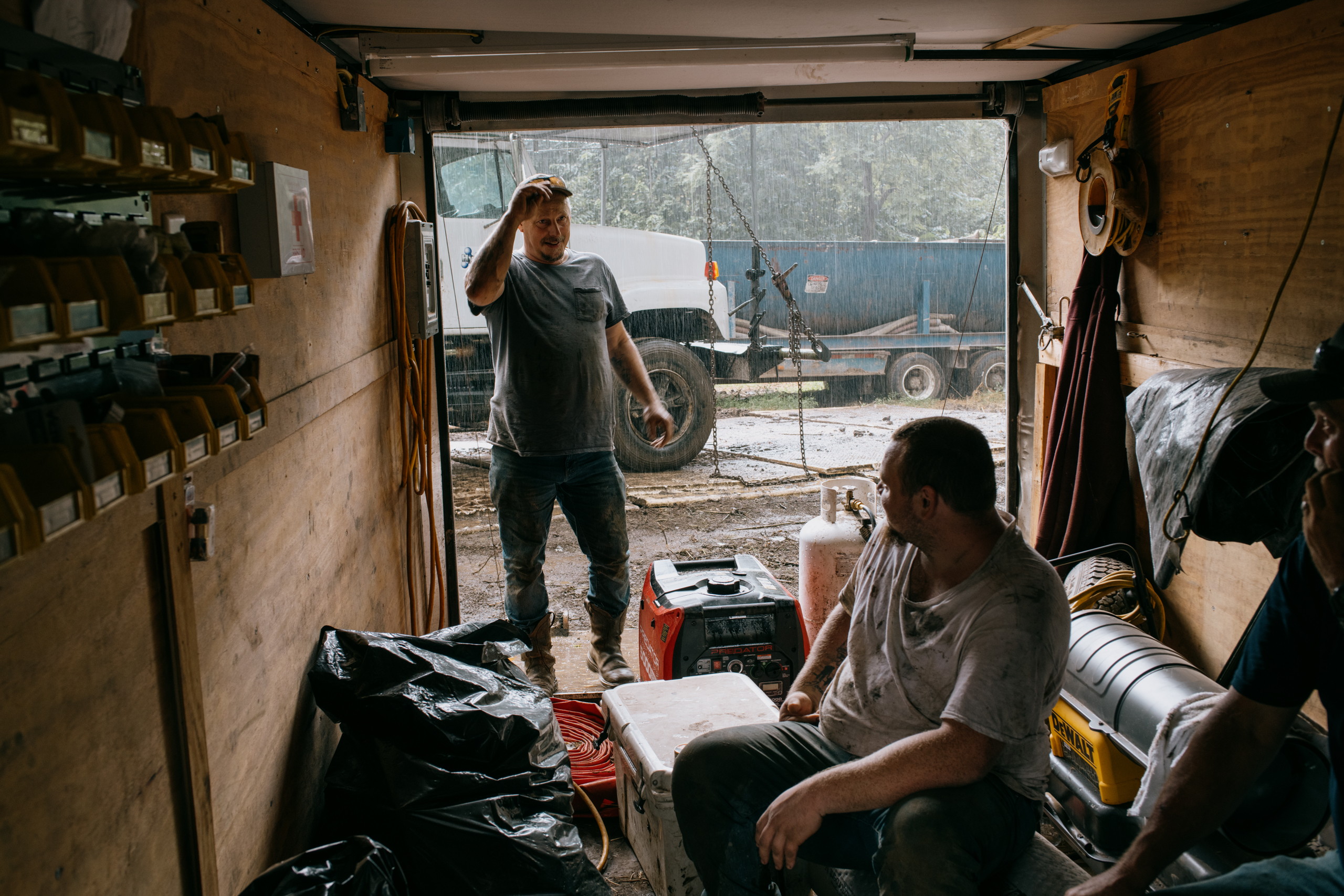
Paul Jones, leader of the crew from Hydrocarbon Well Services, steps into the shelter of a trailer during a midday downpour on Muskingum Island to speak with his nephew, Ronald Jones. Downpours like these were not uncommon and the crew would take shelter wherever they could in their heavy equipment, trucks, or trailers.
As time went on, Jones’ crew would average one well a week. For the next several months, he and his Buckhannon-based crew would spend the week staying at local hotels, traveling home on the weekends. They were used to the travel, and said this wasn’t the worst work situation they had ever been in: one plugging job in Pennsylvania kept them on site, 24 hours a day, and they didn’t go home for months.
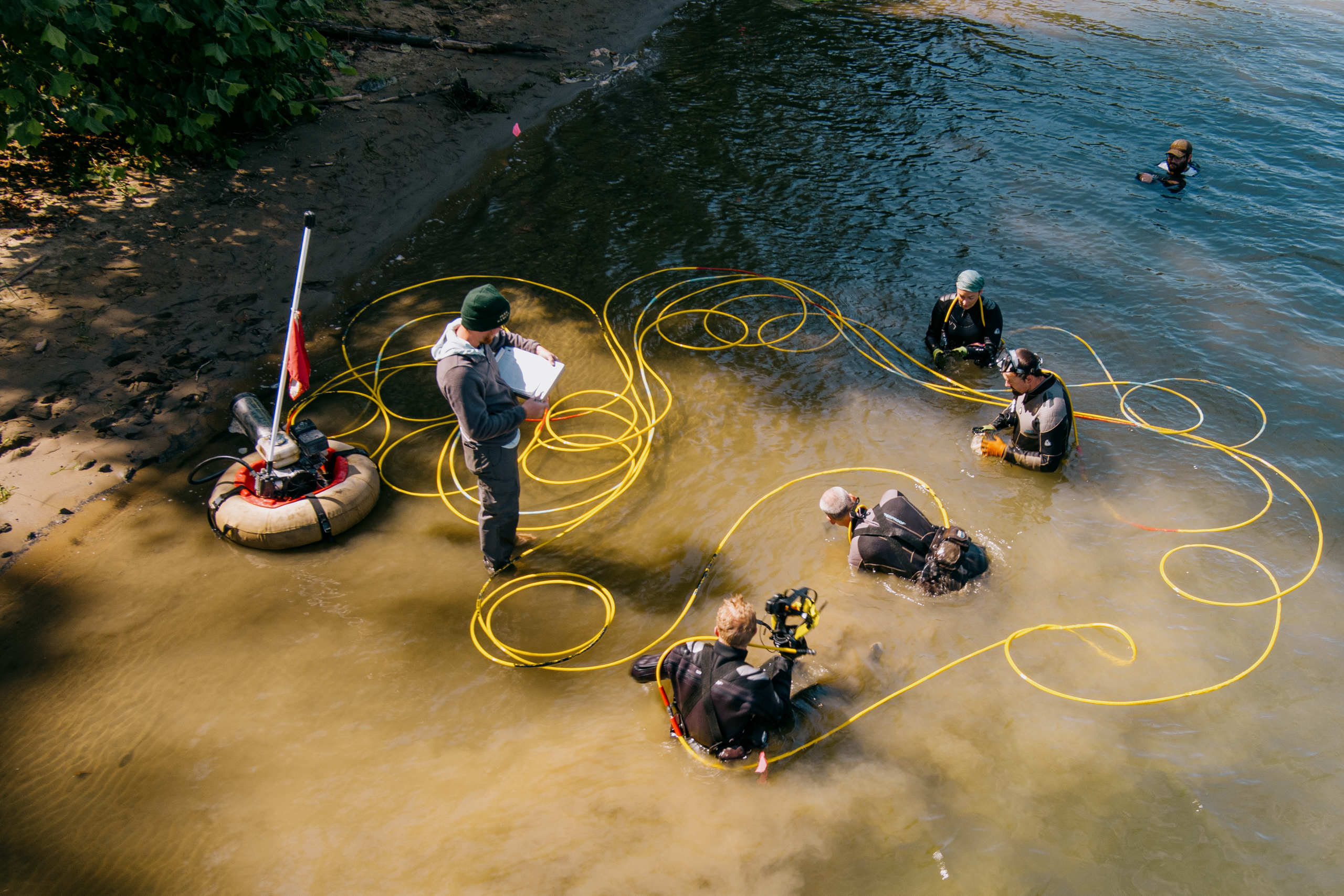
ESI biologist Brandon Yates (left) stands amidst air lines as divers search an area near one of the five orphan oil and gas wells in the river during the mussel salvage.
By mid-August, while Jones and his crew continued to plug wells on the island itself, a team of divers had started to salvage and relocate the local mussels of the banks of Muskingum. Like Jones’ well plugging crew, this team was also from out-of-town. And like their well plugging counterparts they possessed a very specific knowledge set and skills gained through years of field experience.
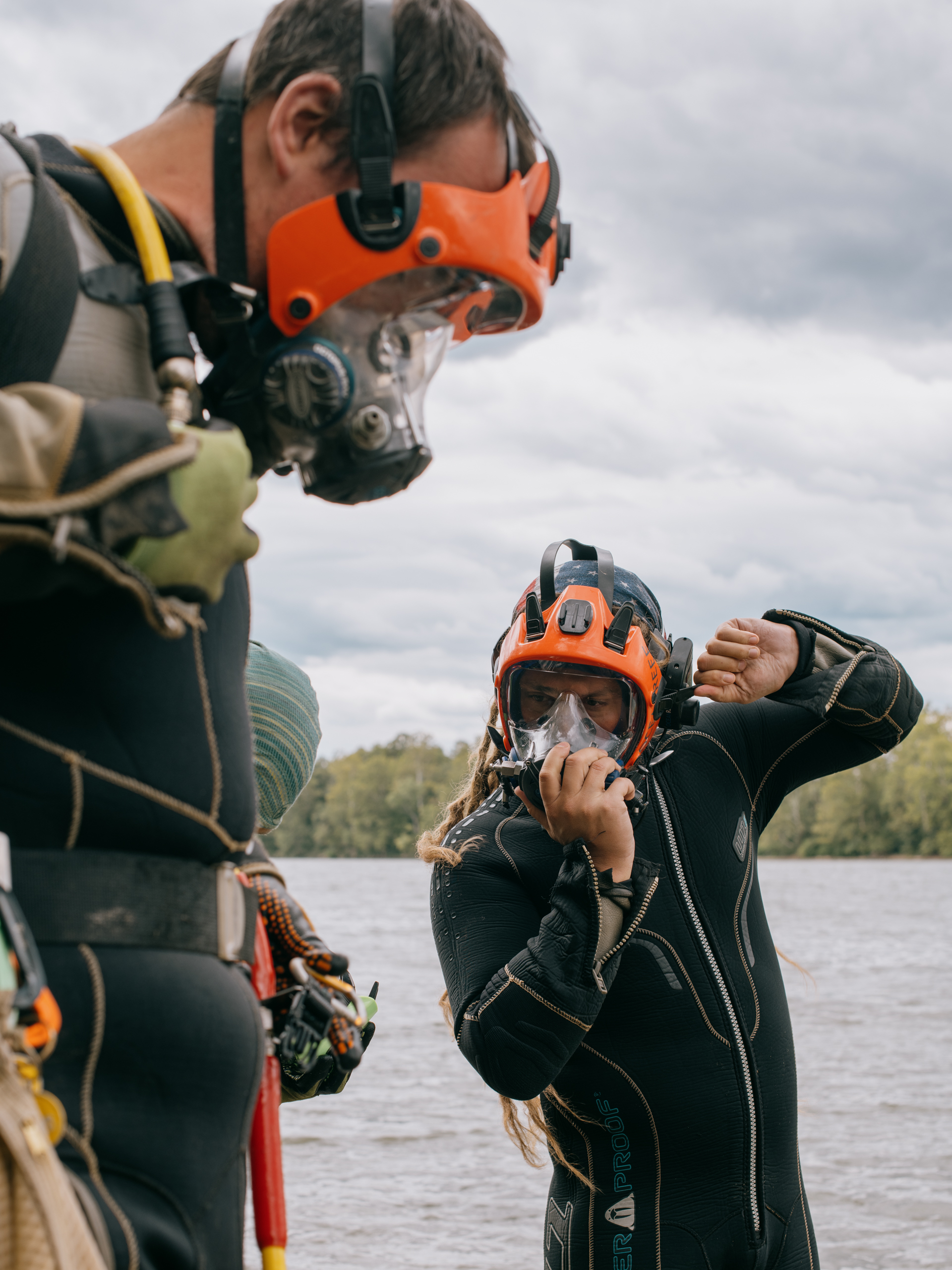
This was a unique job for the biologists. Typically, when they are contracted to do a mussel survey and salvage, it’s to comply with regulatory requirements triggered when a construction project endangers a wildlife habitat: projects that tend to have negative impacts on the environment. But at Muskingum Island, the project would ultimately improve the mussel habitat by removing the orphaned wells. For the biologists, it was a rare moment where they found their experience and knowledge being used in a way that led to better outcomes for a habitat.
Plus, the biodiversity of the mussel population was also a huge attraction. Here, the biologists could possibly see a mussel they’d never encountered before.
“This is one of the spots you want to be,” said biologist Paul Robért. “You could go your whole career and never see certain mussels. But then you come here and you have a high chance that, you know, you can see some good lifers.”
Biologist divers Devan Smith and Brian Dennis adjust their diving gear before starting on another section of the mussel salvage in the waters on the channel side of Muskingum Island.
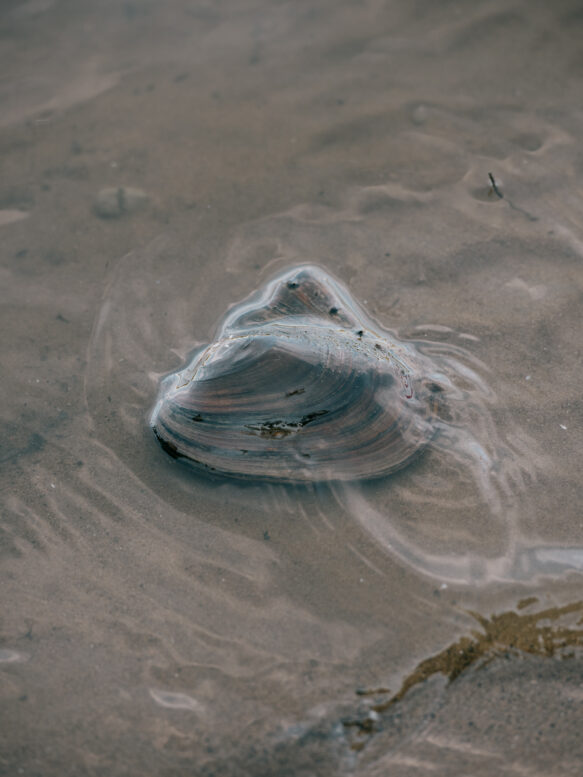
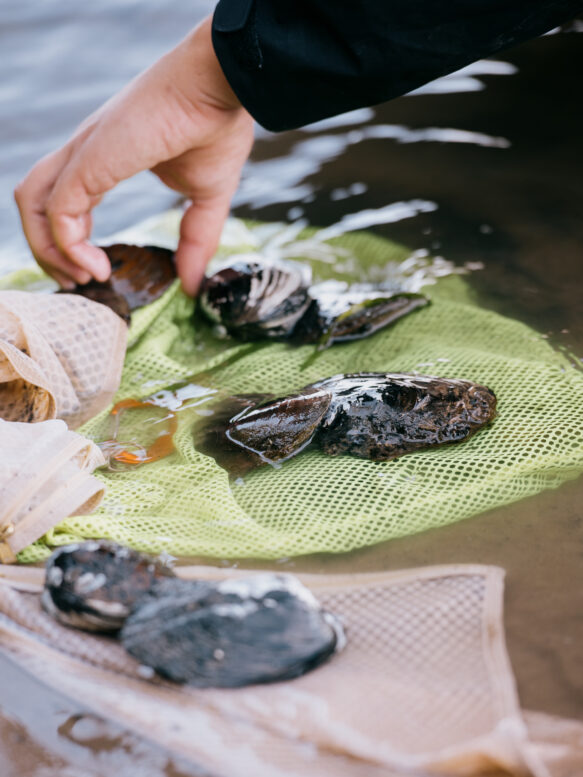
Left: A pink heelsplitter mussel (Potamilus alatus) discovered during the mussel salvage operation at Muskingum Island. Right: Brian Dennis, a biologist with Environmental
Solution Services, Inc., sorts out bags of mussels that divers had just brought in to measure them and record their species.
Over 12 days the divers would spend 199 hours submerged in the river, searching plots for mussels. Visibility was poor: even in the shallowest areas, the divers sometimes couldn’t see further than three feet ahead of them when barges and other watercraft would pass by the island in the channel. As the divers discovered mussels, they put them into a mesh bag and continued their search. The salvage operation relocated 698 mussels from the five search areas around the wells.
At the end of the day the biologists moved the mussels upriver from the well sites — clearing the way for the dredging that would need to be done to uncover the underwater wells.
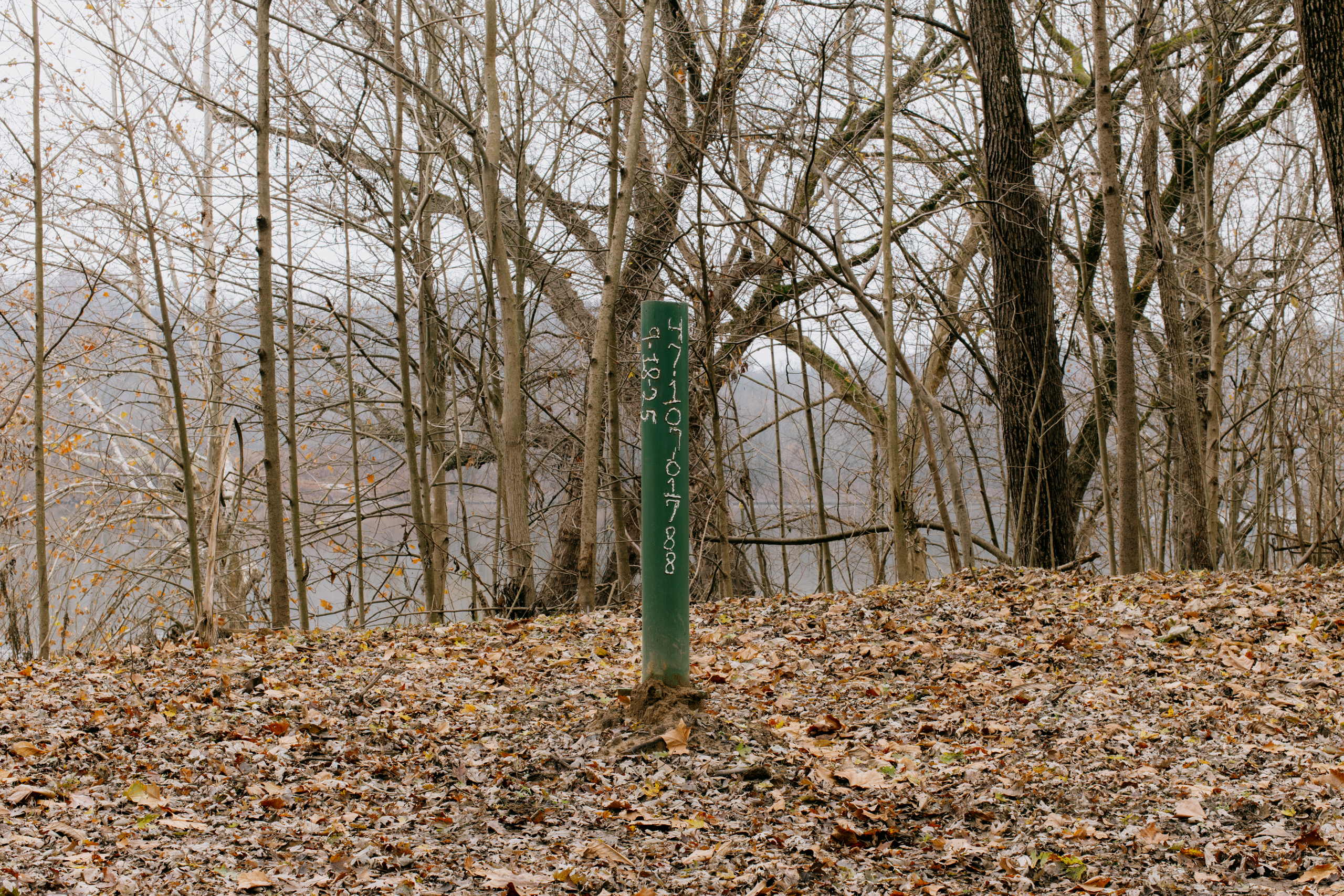
At the site of each one of the eight plugged wells on Muskingum stands a monument: a permanent indicator of the well's location, plugging date and identification number.
The last time I was on Muskingum was November 2025, and the work was not yet done.
I followed the path along the island’s wells, where fallen leaves hid most of the recent plugging from Jones’ crew. But the well monuments, painted green, were visible: they stood in stark contrast to the browns and grays of fall’s transition into winter. Eventually each monument’s green paint will wear away as the date and identification numbers rust over. The monuments will fade back into the landscape.
For refuge manager Victor Elam, it’s satisfying to watch the project’s progress.
“It's kind of like the saying goes, ‘societies grow great when old men plant trees amongst whose shade they shall never sit,’ or something to that extent,” he said. “I get a lot of satisfaction out of knowing that I'm going to be long gone and people are going to benefit and wildlife is going to benefit as a result of that work.”
Still, there is more to be done. Just offshore, the five underwater wells are still silently leaking into the Ohio River. Before those wells are plugged, crews will have to dredge off the island’s channel side. Last fall, U.S. Fish and Wildlife was waiting for the Army Corps of Engineers to approve a permit allowing dredging. But on Oct. 1, the federal government shut down for a month and half, and the permitting process terminated.
Now, as summer 2026 nears, the work on Muskingum may soon begin again. In March, U.S. Fish and Wildlife received the final permit it needed to plug the five orphan wells in the river. If the conditions allow, Hydrocarbon Well Services plans to resume work sometime in June.
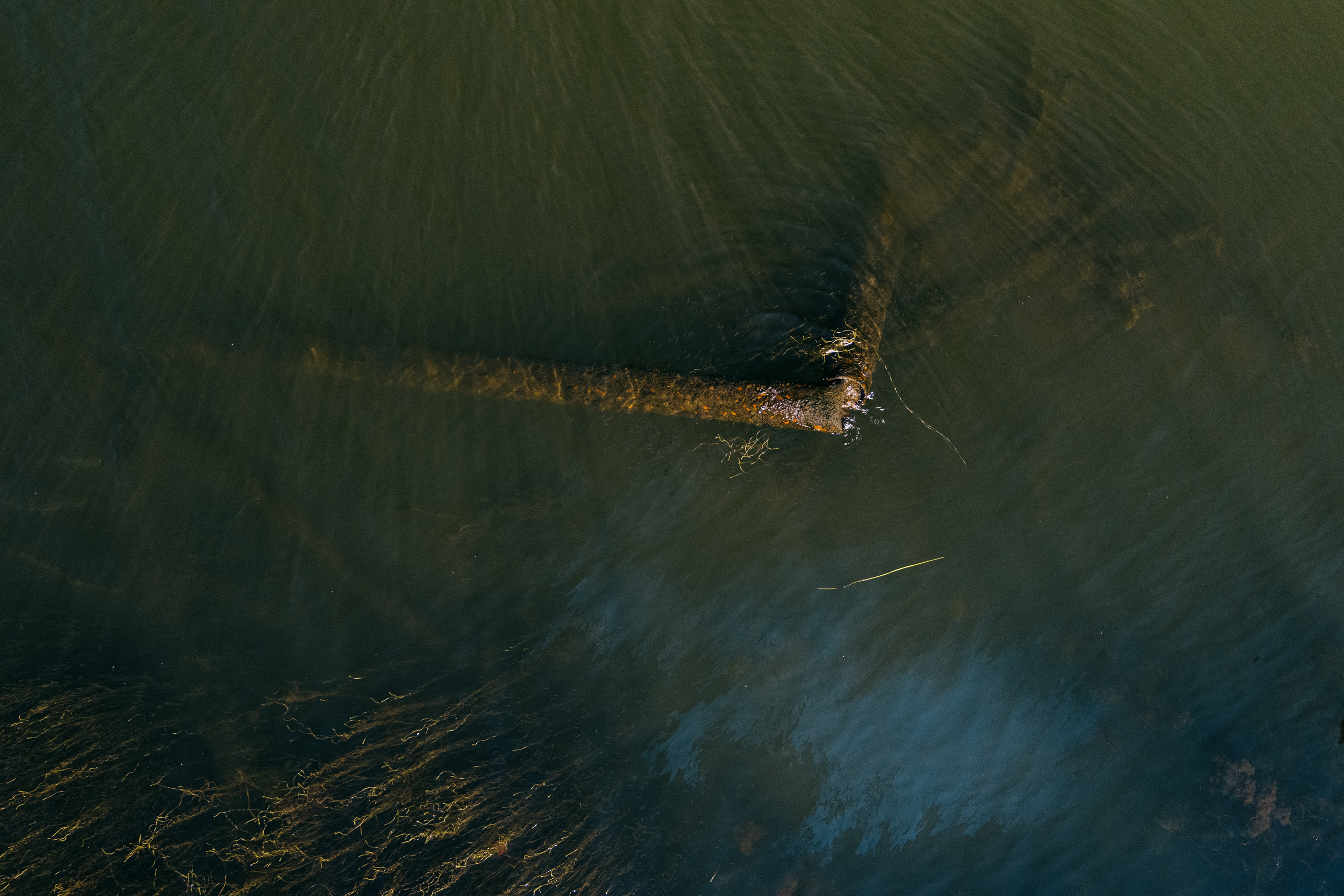
A piece of well casing breaks the surface of the water just off of Muskingum Island along its shoreline.